Write a plugin for your service
A plugin teaches Vaubaan one service — its tools, how each call is cut into permissions, and five plain facts per permission that place it on a row — and you write it with the published kit, without reading the gateway’s code.
GitHub and Supabase: GitHub has run real tools on a live instance, Supabase its discovery only (known limitations).
Gmail, Notion and Google Calendar: modelled from their public documentation and tested against doubles; none of them has run against the real service yet (known limitations).
Five questions per permission
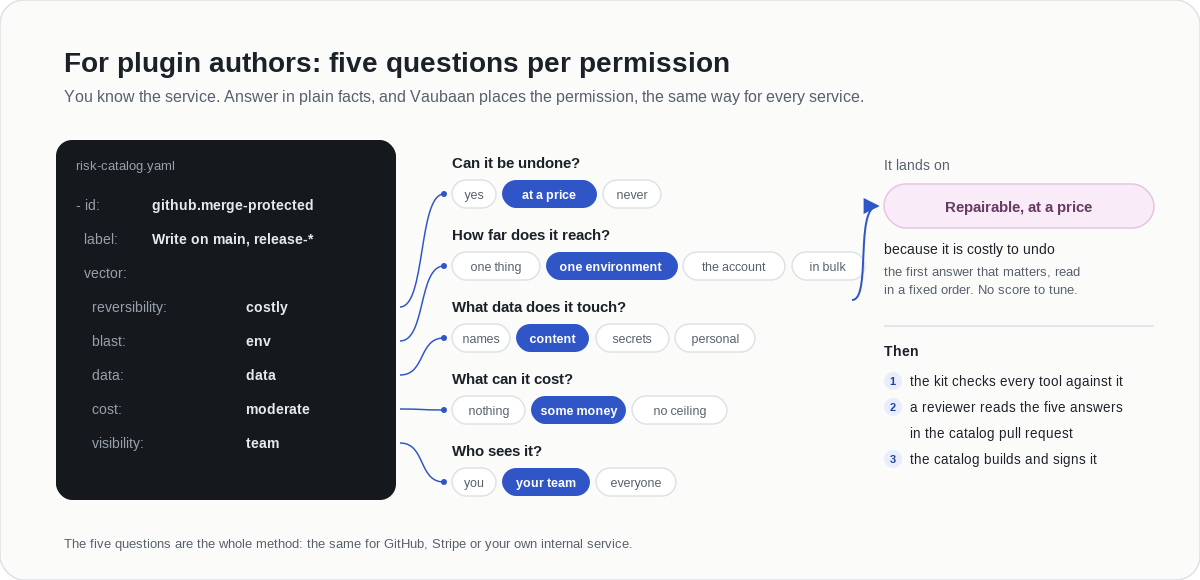
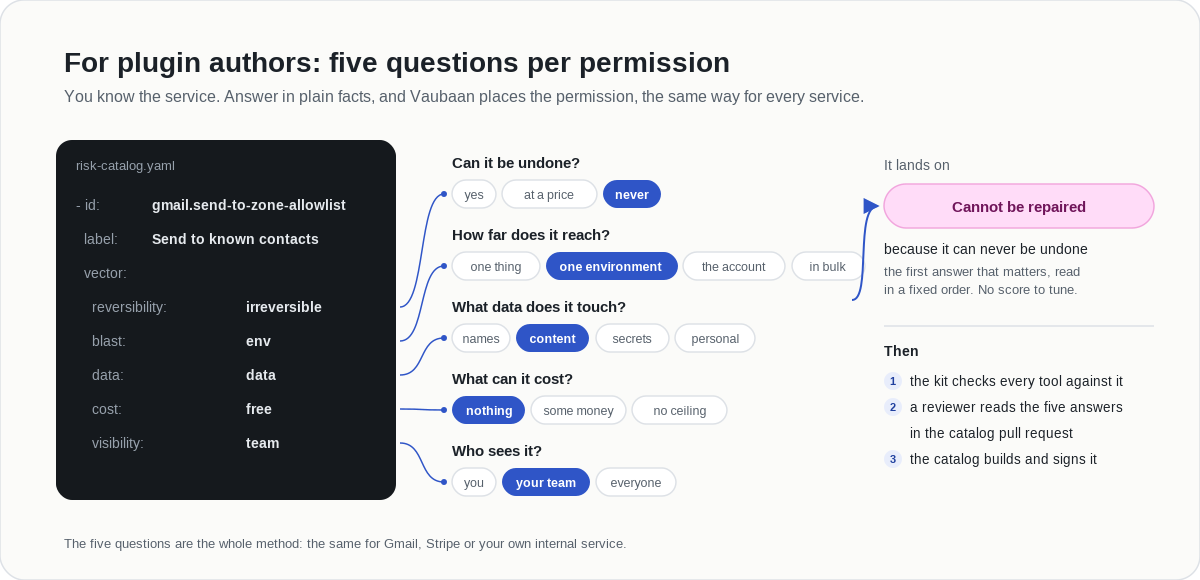
Can it be undone? How far does it reach? What data does it touch? What can it cost? Who sees it? You answer in plain facts; Vaubaan places the permission on its row, the same way for every service, and a reviewer reads your answers like code.
Model the service first
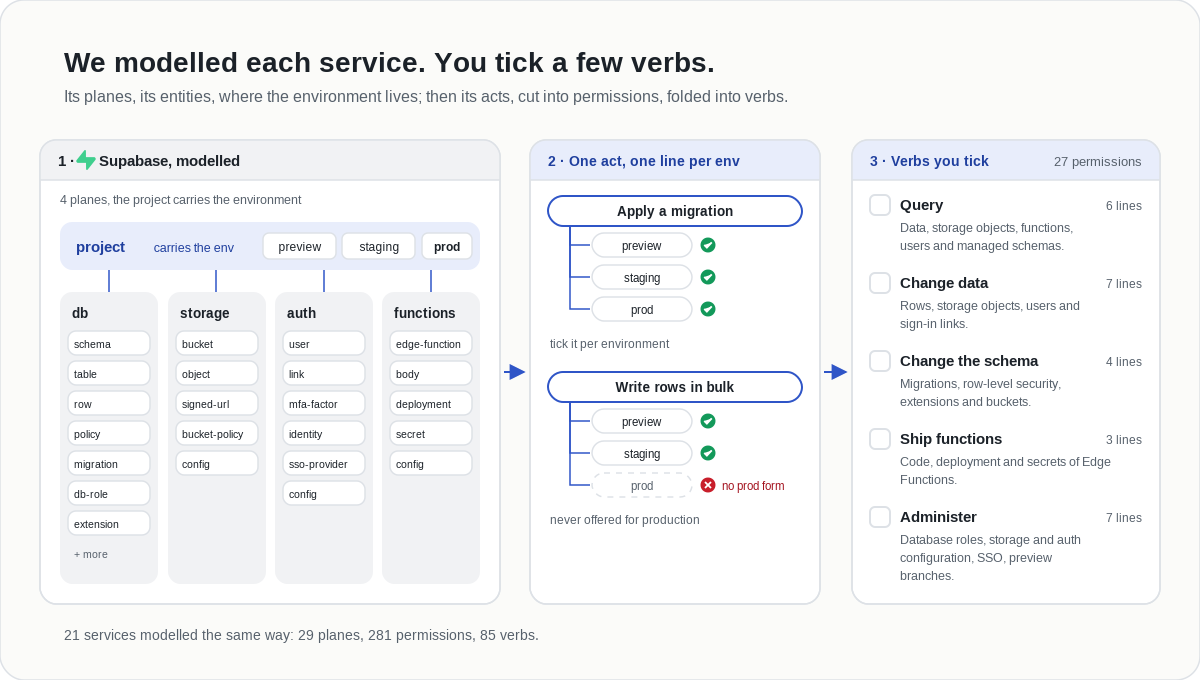
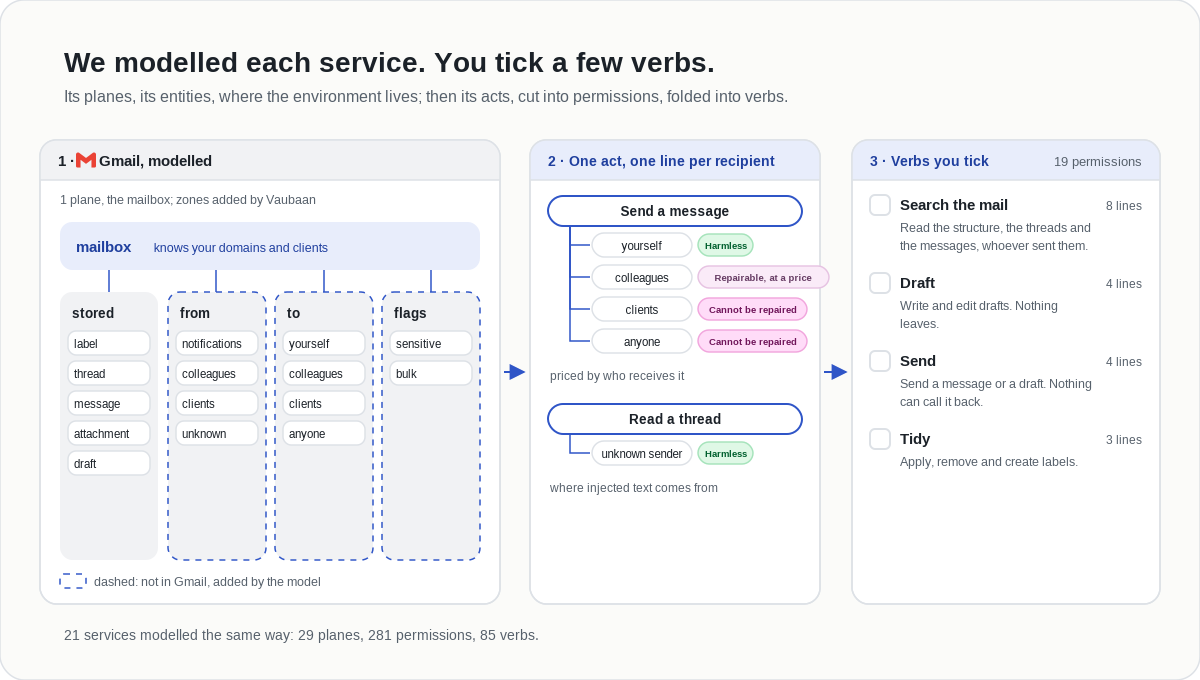
Name its planes and entities, and where the environment lives. Cut each act into permissions on the facts that change the harm — a branch, a recipient, an environment — and fold them into a few verbs a person ticks.
The kit
- Start a plugin project (built):
npx @vaubaan/plugin-cli init, a complete plugin for an imaginary service, its tests passing, with the instructions a coding agent follows to replace it by yours. - Deploy it to your instance (built): the archive goes to your gateway, pending until an administrator activates it.
- Try a call without a gateway, run a local gateway, sign a private plugin, submit to the catalog (planned): the intents.
Read a real one
How to write, test and deploy a plugin, step by step: the author guide. GitHub’s risk catalog and its page on this site, generated from it. The repository’s own plugins and how they are reviewed: plugins/README.md.
This page as Markdown: /write-a-plugin.md